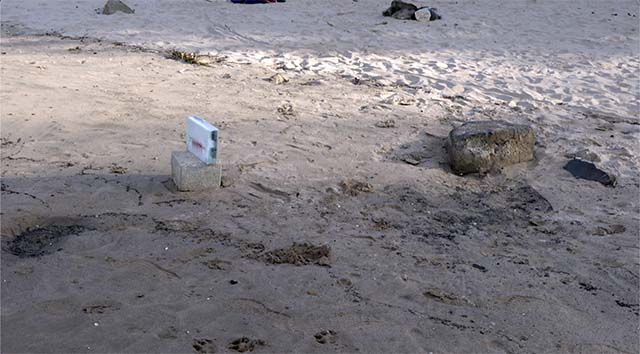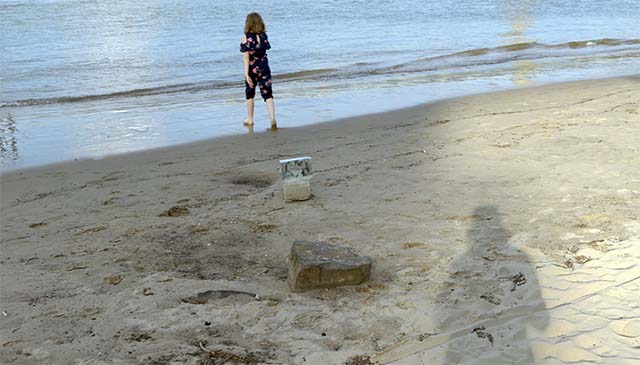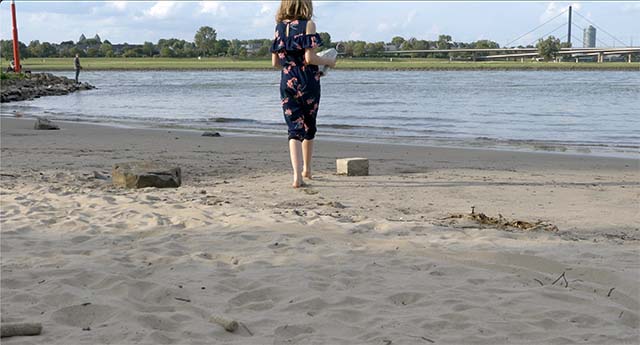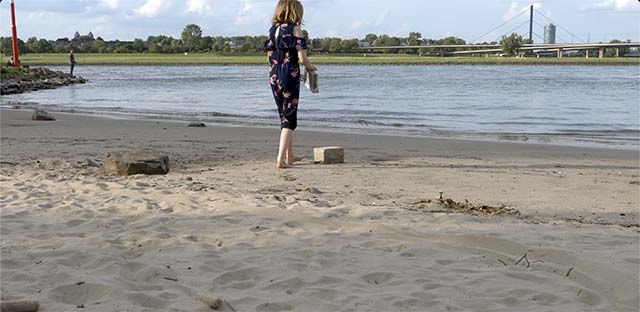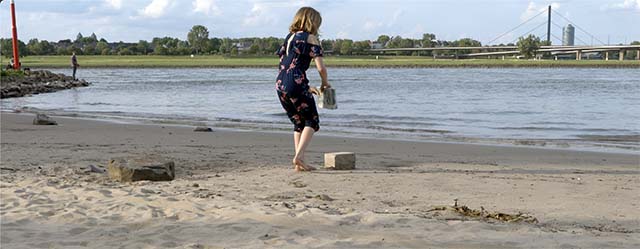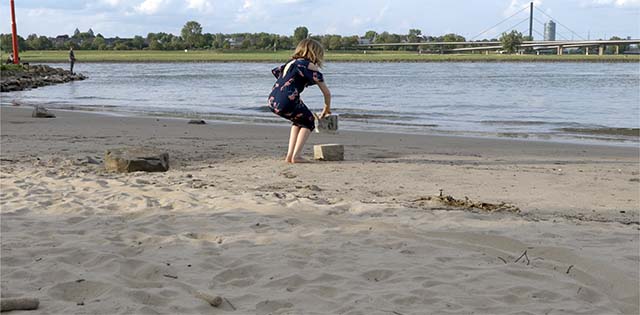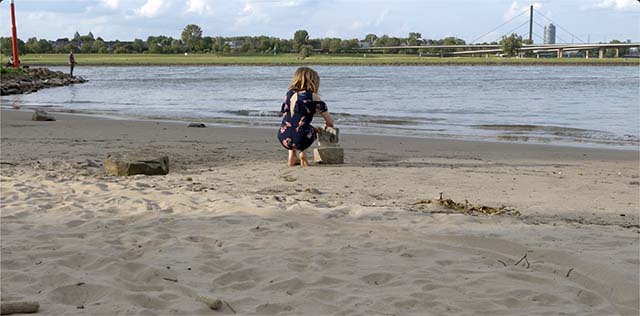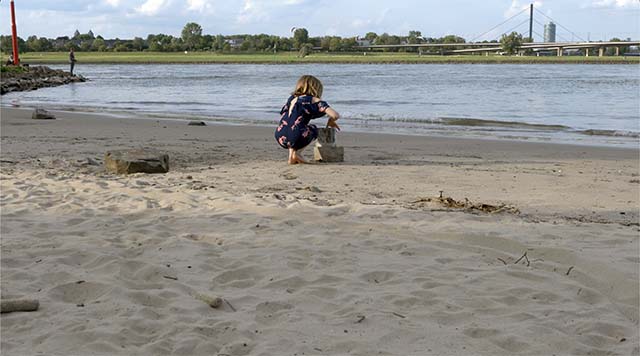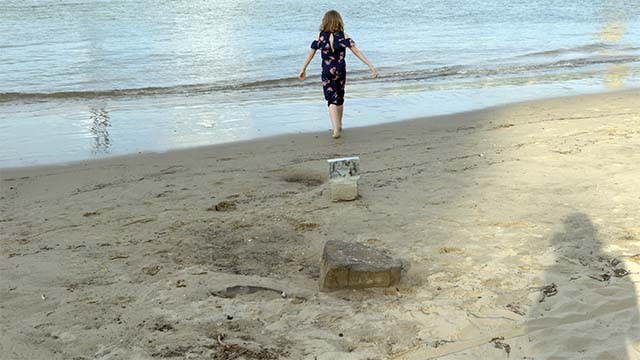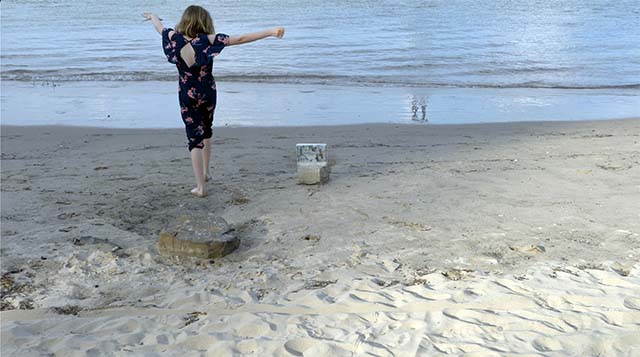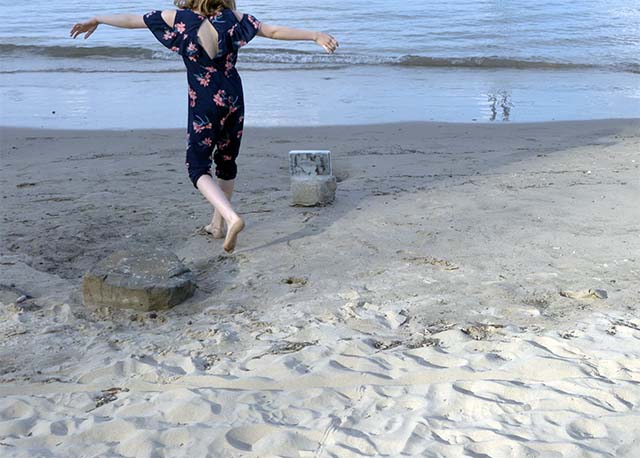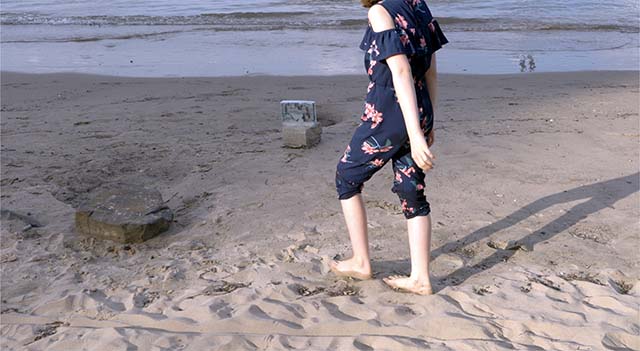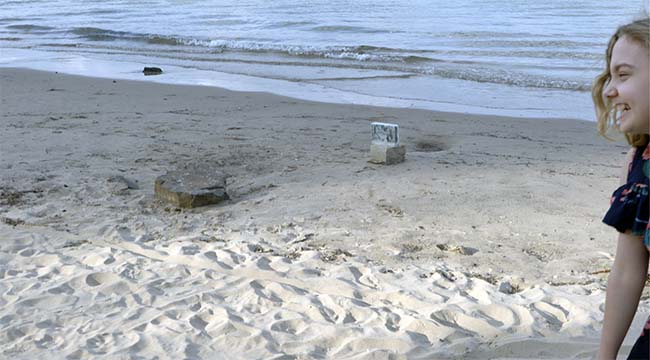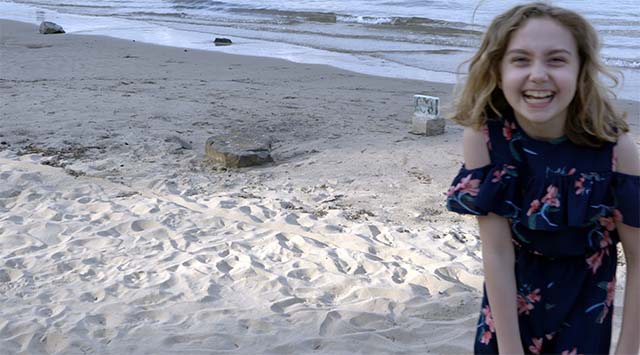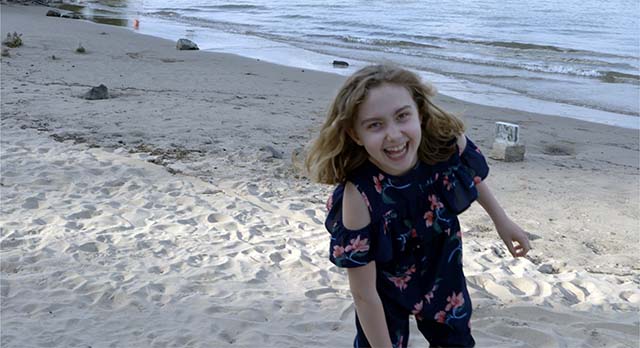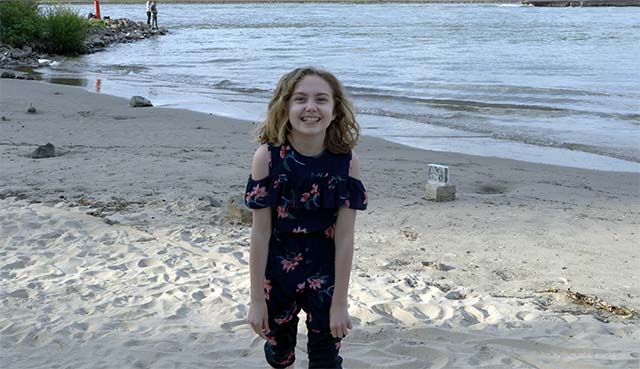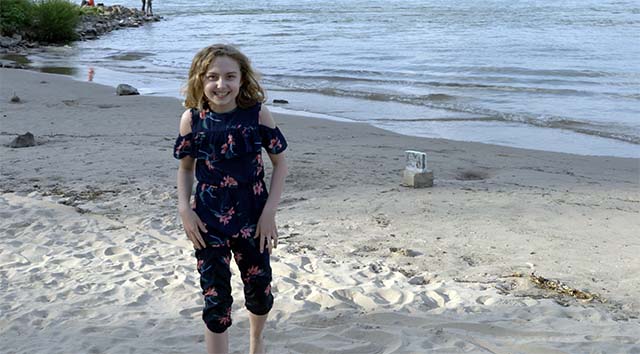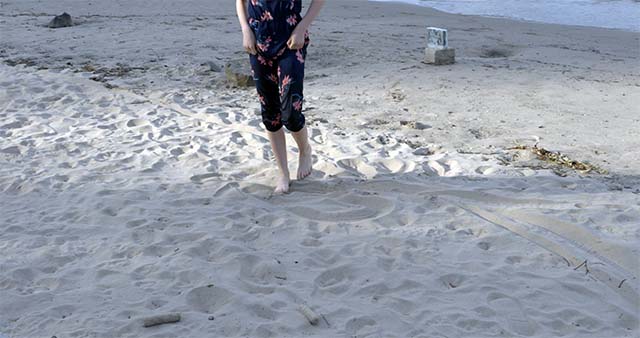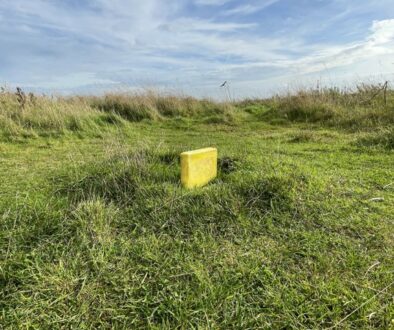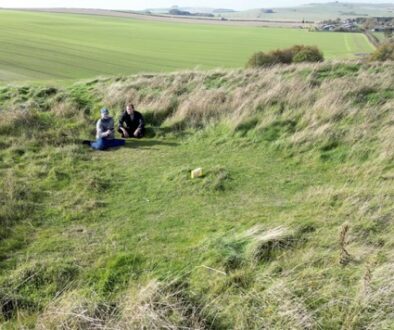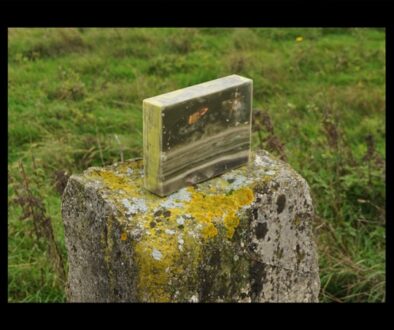
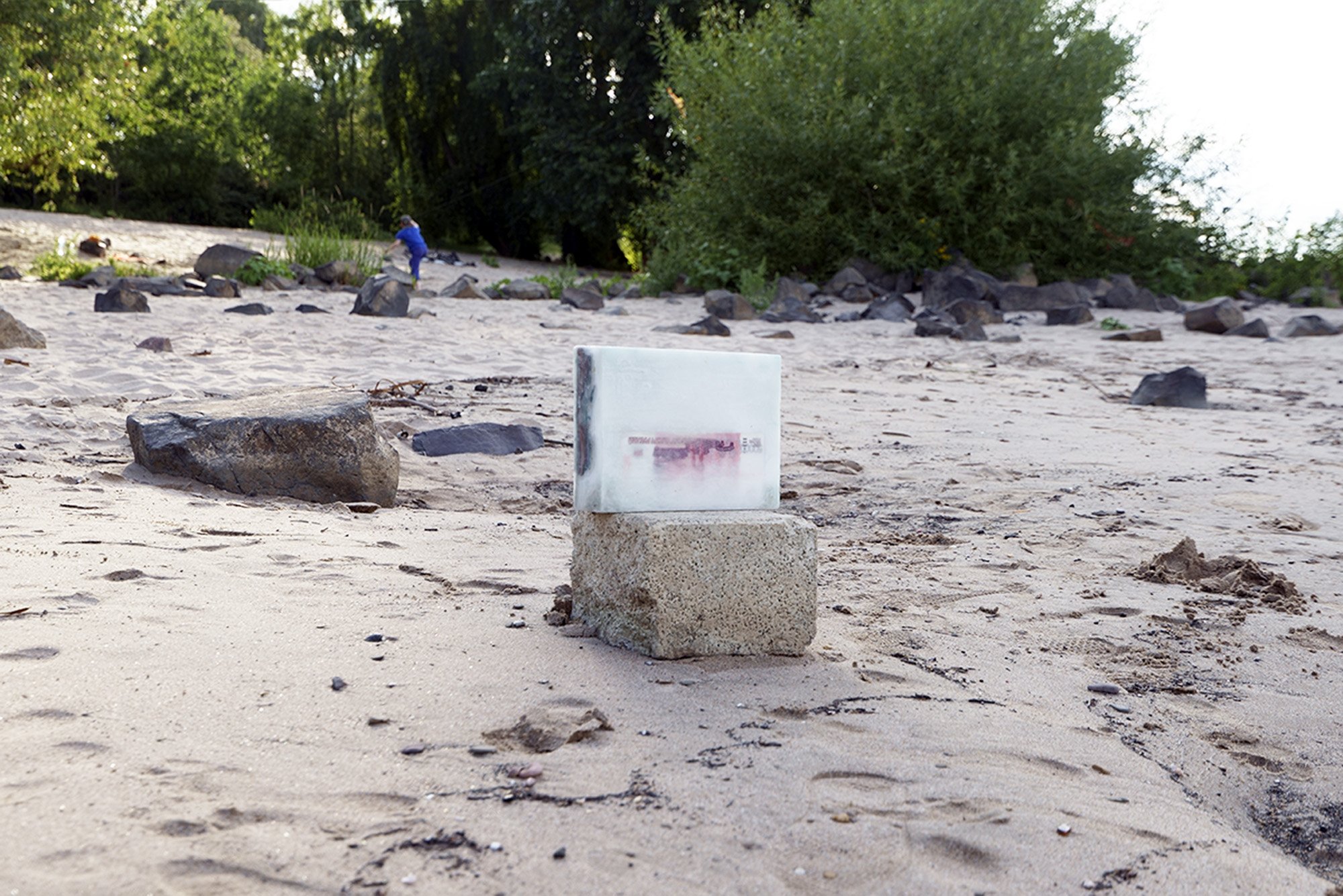
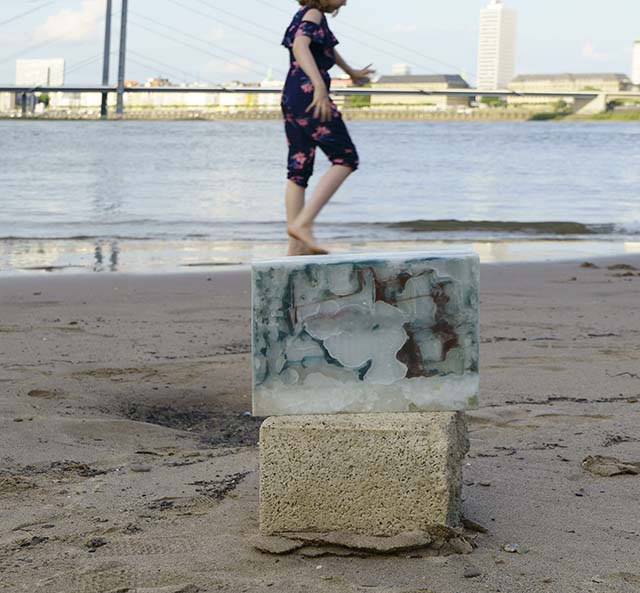
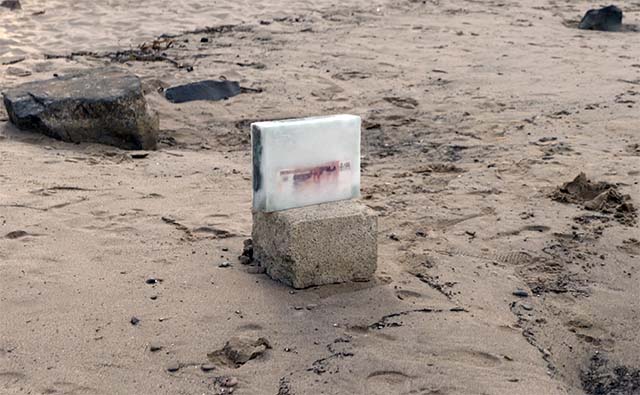
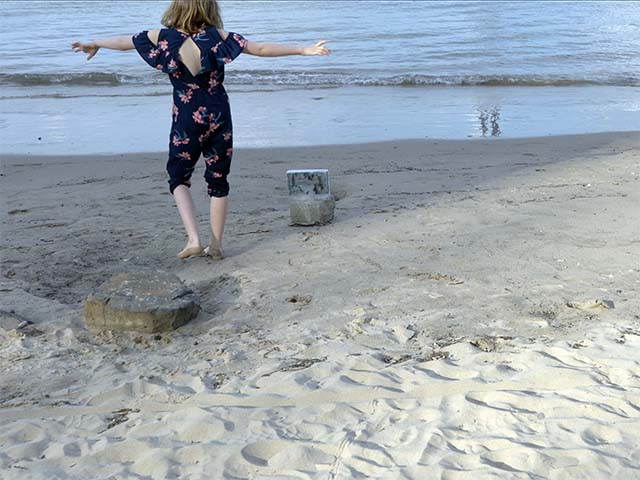
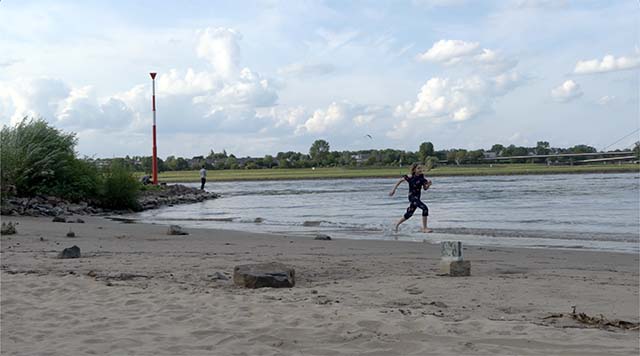
In the background, the Rheinknie Bridge, which connects Oberkassel with Carlstadt in Düsseldorf. Lucia can be seen above the stone she placed on another stone. It is the view in the direction of the Kunstakademie in Düsseldorf, which is located in the Altstadt. It was not so long ago that the beach was suitable for recreation; I still remember the heavily polluted times in my youth when the Rhine really only made one think of local recreation from afar.
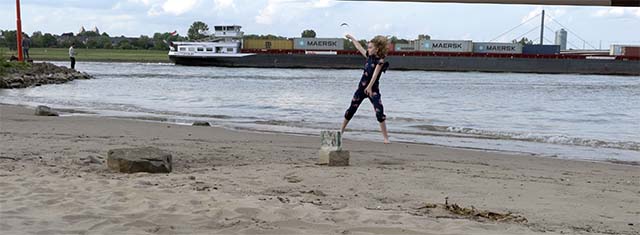
Joy of life jumping.
The economic and environmental advantages of shipping lie in the incomparably low overall economic costs per tonne-km and in the multipurpose function of the waterway as a living and recreational space. This is why the Federal Government is relying on the ship to be able to cope with the forthcoming increase in traffic in an ecologically compatible and cost-effective manner.
Water networked
The network of federal waterways in Germany comprises about 7,350 kilometres of inland waterways, of which about 75 percent are rivers and 25 percent canals. The federal waterways also include approximately 23,000 square kilometres of sea waterways. The facilities on the federal waterways include 450 lock chambers and 290 weirs, two ship lifts in WSV operation, 15 canal bridges and two dams. The Waterways and Shipping Administration (WSV), as a subordinate department of the Federal Ministry of Transport, Building and Urban Affairs (BMVI), ensures safe, smoothly flowing and thus economical shipping traffic. The tasks of the WSV include the maintenance, operation, expansion and new construction of federal waterways, including federally owned facilities.
Important federal waterways for freight transport in inland areas are the Rhine (with its tributaries the Neckar, Main, Moselle and Saar) and the Danube, sections of the Weser, Elbe and Oder, as well as some canals connecting these waterways.
They are an essential part of the “wet” Trans-European Transport Network (TEN) and must be maintained and developed accordingly. Existing bottlenecks must be eliminated, especially for inland waterway transport in the network, in order to increase its economic efficiency. The 757 kilometres of maritime waterways provide access to the North Sea and the Baltic Sea and form the link to and from the German seaports to ensure maritime transport. The riparian states between the Black Sea and the North Sea can be reached via the Danube, the Main-Danube Canal, the Main and the Rhine. The West-East Magistrale forms the canal network between the Rhine and the Oder. There are more than 100 modern public sea and inland ports. 56 of 74 metropolitan regions in Germany have a waterway connection.
Inland waterway transport
In Germany, freight volumes of up to 240 million tonnes are transported annually via the federal waterways, with a transport performance of 65 billion tonne-kilometres. This corresponds to almost 75 percent of the freight transport performance of the railways or approximately 14 million truck journeys. Furthermore, about 1.5 million containers (TEU – Twenty Foot Equivalent Unit) are transported by inland waterways, which corresponds to an additional 700,000 truck journeys. Thus, inland navigation makes a significant contribution to meeting the demand for transport, and does so cost-effectively, on time and in an environmentally friendly manner. Approximately 400,000 jobs depend on inland navigation and the ports. In addition, the “white fleets” and river cruise ships are of increasing economic importance. Many millions of tourists travel on them every year to enjoy the charming water landscapes.
Maritime transport
In 2016, approximately 296 million tonnes of goods were handled in the German North Sea and Baltic Sea ports, one third of which were containerised. In maritime passenger transport, more than 30 million passengers arrive and depart from German seaports every year, of which around 13 million are cross-border passengers. In the case of domestic German coastal traffic, the focus is on traffic to the East and North Frisian islands. International maritime passenger traffic is mainly on the Baltic Sea, especially to Scandinavia.
Water – not only for transport
In addition to their environmentally friendly transport function, the federal waterways – which is unusual for a transport route – have other functions. They are used for drinking and service water supply, irrigation, power plant use, sewage disposal, flood drainage, but also for fishing. In addition to their ecological biotope function, federal waterways have a high recreational value for people. In order to make Germany’s waterways more natural again, the federal programme “Blue Ribbon Germany” was launched, in which the Federal Ministry of Transport and Digital Infrastructure is participating as a co-initiator. With an interconnected network of approximately 10,000 kilometres of federal and state waterways, the many charming inland lakes and the 23,000 square kilometres of lake waterways on the North Sea and Baltic Sea, Germany is a highly interesting water sports region in the heart of Europe. You can find more information in the Water Sports section.
Maritime safety
Maritime safety is guaranteed and constantly improved by a large number of international conventions.
Maritime transport industry
The maritime industry in Germany is a branch of the economy with very positive future prospects and high overall economic importance.
Federal waterways
The network of federal waterways in Germany comprises about 7,350 km of inland waterways, of which about 75 percent are rivers and 25 percent are canals. The federal waterways also include approximately 23,000 square kilometres of sea waterways. The facilities on the federal waterways include some 450 lock chambers and 290 weirs, two ship lifts in WSV operation, 15 canal bridges and two dams.
Federal Waterways and Shipping Administration (WSV)
ELWIS – Electronic Waterway Information Service
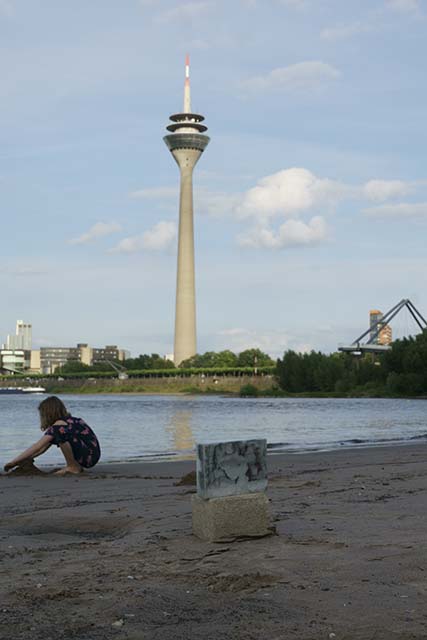
The Rhine Tower (built 1979 – 1982, architect H. Deilmann) is the striking landmark of Düsseldorf’s Rhine scenery. It stands on the edge of the southern city centre at the entrance to the MedienHafen, right next to the North Rhine-Westphalian parliament and the WDR (West German Broadcasting) respectively. At a height of 172.5 metres, it has the QOMO restaurant with 144 seats at the window front, which rotates once around its own axis within 72 minutes.
Below it is the viewing platform M168 (168 m) with a snack bar and event areas with a breathtaking view of the Rhine metropolis: MedienHafen, Altstadt, Hofgarten, Königsallee and the Rhine with its family of bridges lie at the foot of the Rhine Tower. In fine weather, the view extends all the way to Cologne Cathedral. The two public lifts transport visitors to the various levels at a speed of 4 m/s.
Lichtzeitpegel is the name of the clock light sculpture by the artist Horst H. Baumann at the Düsseldorf Rhine Tower. It was put into operation on 24 November 1981 and is, according to the Guinness Book of Records, the largest decimal “time scale” in the world. The clock is also called a decimal clock, although the “light time scale” shows the classical 24-hour time and the digits are displayed in the unary system.
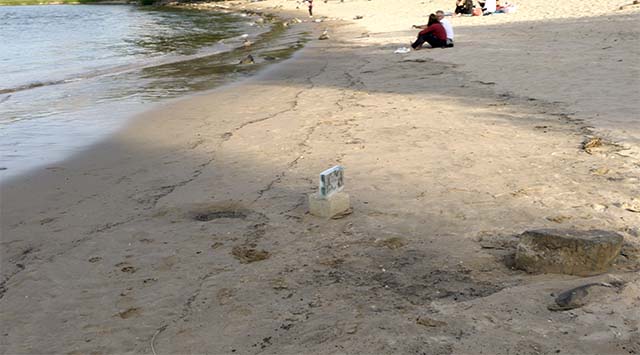
All learning is circular: the human being notices something, “aisthesis”, relates and thus changes the situation both in himself and in what is perceived. This in turn goes on endlessly, like a spiral. Listen to the back and forth sound of the sea. Käthe Kollwitz’s favourite holiday resort was once called Rauschen; now it is called Svetlogorsk.
Christian Johann Heinrich Heine (* 13 December 1797 as Harry Heine in Düsseldorf, Duchy of Berg; † 17 February 1856 in Paris) was one of the most important German poets, writers and journalists of the 19th century.
Heinrich Heine is considered one of the last representatives and at the same time the overcomer of Romanticism. He made everyday language suitable for poetry, elevated the feuilleton and the travelogue to an art form and gave German literature a previously unknown, elegant lightness. The works of hardly any other poet in the German language have been translated and set to music so frequently to this day. As a critical, politically engaged journalist, essayist, satirist and polemicist, Heine was as admired as he was feared. Banned from publishing by the German Confederation, he spent the second half of his life in exile in Paris. Anti-Semites and nationalists were hostile to Heine beyond death because of his Jewish origins and his political stance. The outsider role shaped his life, his work and its reception history.
His home town of Düsseldorf had great difficulty naming its university after him for decades; the anti-Semitism was probably still too deep-seated.